


L. Linkevičius: It’s time for the EU to show that Ukrainians fought not in vain
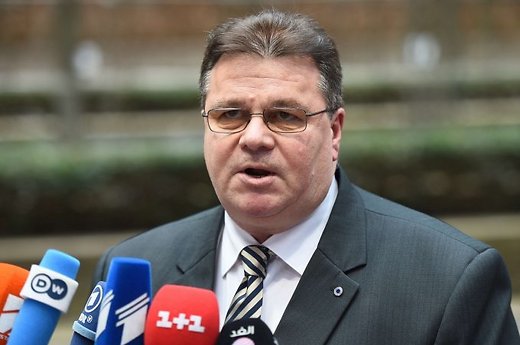
Two years after the demonstrations on the Maidan in Kiev, we remember the unity and the determination. We remember, too, the blood and the violence that was visited upon a peaceful crowd. But we also remember the flags of the European Union flying high and proud.
The Maidan gave birth to a new Ukraine, a new society determined to join Europe and ready to die for it. This same society later sent its sons and daughters to defend against the Russian aggression in Crimea and Eastern Ukraine. Almost 2,500 Ukrainian soldiers never came back. There were more than 9,000 victims in total.
The West was united in imposing sanctions on Russia and assisting Ukraine to stand up. At the same time it pushed Kiev to advance reforms. The country has delivered on both economic prosperity and good governance, all the while fighting a war against an aggressor nearly four times its size.
In Paris last month we witnessed how terror and fear can take over normal life. That’s how Ukrainians lived every day. In the eastern part of the country, they still do.
Yet Ukraine carries on and continues to improve, and the new government deserves credit for doing the right and unpopular things even during harsh times. When Ukraine’s minister of finance, Natalie Jaresko, declared a few weeks ago that the country’s debt-restructuring process was complete, the news didn’t garner many headlines. Some EU governments have scored more attention doing nothing.
We need to acknowledge Ukraine’s efforts. Ukraine’s civil society has demonstrated exemplary resolve in the country’s push toward Europe, urging the government to change and not drift away. Civil society remains at the forefront of guarding that course. They need the EU, but the EU also needs them. They fought for European values so Europeans wouldn’t have to fight for themselves.
The EU must now send a strong signal of support to the Ukrainian people, showing them that they belong with us. They should be allowed to see the dream they died for. They should be welcomed as part of the EU’s visa-free regime.
The current refugee crisis and Europe’s massive, uncontrolled migration may make us think more of limits than liberalization. But here we shouldn’t fall for comfortable yet misleading answers. A visa-free regime for Ukrainians wouldn’t constitute a challenge for EU migration. Ukrainians make up only 3% of all people seeking refuge in the EU. Most of those have already been living in the EU for some time already. There won’t be long queues of Ukrainians at the border eager to leave the country.
In at least one sense, that shouldn’t be the case. Only one out of every six Ukrainians has ever traveled abroad. There should be more. More who deserve the opportunity to see what the EU means in everyday life, what it means to not be discriminated against, to be the same citizen from Brussels to Bristol to Brasov. This year, the number of Ukrainians visiting Lithuania doubled, showing that the interest is there.
Visa-free travel would also help Ukrainians bolster the quality of the workforce in Lithuania, as well as the other bordering countries. Almost 35% of the foreigners who are currently in Lithuania with a work permit are from Ukraine, filling the job market with skilled labor. These workers, who include drivers, builders and engineers, compensate for shortages in the domestic labor force.
Giving Ukrainians a chance to travel without visas would also facilitate youth and student exchanges, strengthening the personal ties that make social changes irreversible. Direct contact and exposure to European values and ways of governing will deepen Ukraine’s relationship with the rest of Europe. Europeans also will benefit from a greater cultural and historical understanding the this country, and its people, that plays such an important role along Europe’s eastern border.
During the Revolution of Dignity on the Maidan, Ukrainians fought bravely for the values that the EU represents. Now it’s time for the EU to show that it was worth the fight.
Linas Linkevičius, Minister of Foreign Affairs of Lithuania


Social media


