


Lithuanian innovation should significantly reduce global demand for plastics, benefit the environment
As the global production of plastics grows year by year, its environmental imprint becomes increasingly visible. Thus, last year alone, the global production of plastics amounted to 350m metric tons, of which the European Union companies produced 15%. Plastics is widely used in construction, electronic and automotive industries, but 40% of it is spent for packaging purposes.
The situation is dangerous and needs urgent solutions, the environmentalists warn. And Lithuanian innovators come up with handy solutions, Lithuania’s largest newspaper Lietuvos rytas reports.
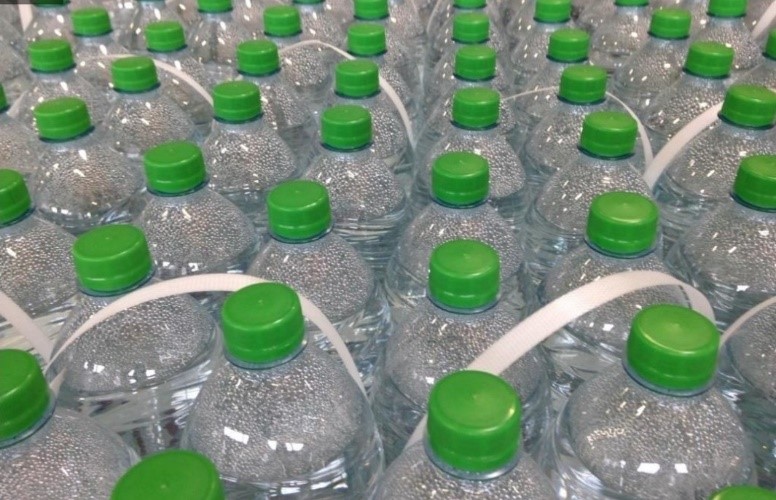
The Lithuanian company UAB Akvavita has proposed two alternatives that may help to reduce the demand for plastics in packaging.
Firstly, it has developed a new-generation plastic bottle that weighs 50% less than the traditional.
‘30% of the new bottle is made of organic and 70% of recycled materials,’ says Aistė Miliūtė, director of Akvavita. ‘This new composition makes the bottle surface thinner, softer and more compressible.’
‘The environmental implications will be far-reaching. Thus, less plastic will be used in the production of the bottle. The transportation will be simpler, as trucks will carry more bottles in one go. CO2 emissions will be cut down accordingly. The used bottles will be easier to crush and take less space in the waste management system. Also, their recycling will be more efficient, as they are already 70% made of recycled materials,’ notes Miliūtė.
Akvavita’s second innovation challenges the established packaging methods. Instead of wrapping a pallet in a plastic film, Akvavita suggests tying it up with a special adjustable band.
This new approach not only allows packing larger quantities of, say, bottles on the same pallet, but also frees the exporter from the use of plastic. Its demand in the packaging sector may go down by 90%, Akvavita maintains.
The technology also reduces energy consumption by bypassing thermal processing which is required for the application of the plastic film.
According to Akvavita’s estimates, the universal shift to the adjustable packaging band may cut down energy consumption by 63%, transportation costs by 12%, and emissions by 12%.
The development of the new bottle and the packaging band took three years to complete. The two innovations should enter the market in the near future.
Source: lrytas.lt


Social media


